

Must-See Places in Porto: Your Ultimate Local Guide to Exploring the City

Updated: Nov 10, 2025
Hellou my beautiful people, it's your friend Jonny, and welcome to my receipt how enjoy Porto like a Portuguese.
Living 7 years in Germany made me really reflect and appreciate the things from my hometown that I missed, so in this post I want to share with you my favorite to do/see spots in Porto.
🗺️
1. Porto Cathedral: A Blend of Styles and History

Perched high above Porto’s old town with sweeping views over the red-tile rooftops and the Douro River, Porto Cathedral is a must-see destination for anyone exploring this vibrant Portuguese city. Built in the 12th century and touched by Romanesque, Gothic and Baroque styles, the cathedral’s fortress-like facade invites you into centuries of layered history.
Inside, the vast nave and towering columns give way to a serene cloister, where azulejo-covered walls tell biblical stories in brilliant blue and white. For a small entry fee you can explore the hidden gem of the cloisters and tower — worth it not only for the architecture but for the panoramic city views. Whether you’re hunting top things to see in Porto, planning your best places to visit, or looking for “things you cannot miss in Porto”, this cathedral ticks every box.
🎟️ Tickets & Visitor Info: While entry to the main church is free, access to the cloisters (and sometimes the tower) is around €3.
💻 Book ahead online: You can pre-book tickets here: Catedral do Porto – Entry Ticket
São Bento Railway Station: A Masterpiece of Tile Art

Porto is a city that moves — people flowing to work, trams gliding through narrow streets, the river breathing quietly beneath it all. Many years ago, a stream carved the valley where São Bento Station now stands. It still runs, hidden underground, guiding the rhythm of the city above.
Built in 1916 on the site of a demolished convent, São Bento Station became both a meeting point and a passageway through time. Step inside and stand beneath the clock — turn slowly in a full circle and let your eyes wander across the walls. Over 20,000 azulejos (blue-and-white tiles), painted by artist Jorge Colaço, tell the story of Portugal’s past: royal processions, epic battles, farmers, festivals, and the rise of the railway itself. Each panel feels like the city remembering where it came from.
Walk through the iron gates and feel the pulse of Porto — trains arriving, footsteps echoing, the air alive with motion. It’s easy to imagine how alive the city must have felt around 1900, when progress and tradition met right here on these same tracks.
Step back outside and you’re in the living center of Porto — the link between the river below and the upper town above. From here, you can wander down to the Ribeira, climb to the Clérigos Tower, or lose yourself among cafés and boutiques along Rua das Flores. However you move, you’ll cross São Bento more than once — because this is where Porto truly begins to flow.
🎟️ Tickets & Visitor Info: Entry is free — simply walk in and take your time with the tiles and the trains.
Batalha Square – From Medieval Roots to Modern Life

As Porto grew outward from its cathedral hill, the world began to change. Between the 12th and 14th centuries, the city’s life clustered around narrow medieval streets — stone, trade, and devotion. But by the 19th century, the hum of progress had reached Porto, and Batalha Square became its new stage.
With the rise of industrialization under King Pedro V, Porto transformed — and so did Batalha. The square filled with light, energy, and people. The grand São João National Theatre rose as a symbol of modern culture, soon followed by the city’s first cinemas and a school of ballet. For the first time, Porto’s citizens could gather not for trade or prayer, but for art, entertainment, and community.
Today, Batalha still carries that spirit — the meeting point between the city’s medieval heart and its modern rhythm. Stand there at dusk, when the lights of the theatre glow against the old façades, and you can almost feel the moment when Porto stepped into the modern age
Santa Catarina Street – The Soul of Porto in Motion

From the quiet heart of the city, Porto stretches north into Santa Catarina Street, a path that has carried the rhythm of daily life for over a century. Once a simple road leading away from Batalha, it has grown into the city’s most vibrant shopping avenue, where tradition and modern style meet side by side.
Today, Santa Catarina comes alive with international brands, local boutiques, and street performers filling the air with music and movement. During Christmas, the street glows with lights and window displays, the smell of roasted chestnuts drifting between shoppers. At its heart stands the ViaCatarina Shopping Center, linking the energy of the past to the pulse of modern retail life.
It’s more than a street — it’s Porto’s open-air showcase, where the city walks, shops, and celebrates together.
Santa Catarina Street & Majestic Café – The Beating Heart of Porto

When people talk about the best things to do in Porto, walking along Santa Catarina Street always makes the list. It’s a lively pedestrian avenue lined with shops, traditional bakeries, and the aroma of fresh coffee drifting through the air.
At its center sits Majestic Café, one of Europe’s most beautiful cafés. Opened in 1921, it’s pure Belle Époque elegance — marble tables, gilded mirrors, and chandeliers that sparkle above steaming cups of espresso. It’s a perfect stop to relax, people-watch, and feel the charm of old Porto.
Chapel of Souls (Capela das Almas) – Porto’s Azulejo Jewel

At the top of Santa Catarina Street, the Chapel of Souls shines like a blue-and-white painting. Its façade, covered in over 15,000 azulejos, tells scenes from the lives of Saint Francis and Saint Catherine. The tiles glow especially bright in the morning sun, making this spot one of the most photographed churches in Porto.
Inside, it’s peaceful and simple — a short stop that feels timeless amid the city’s bustle. If you’re following a walking route through Porto, this chapel is a must-see before heading to Bolhão Market or the Clérigos area.
Bolhão Market:

Right in the heart of the city, Mercado do Bolhão is where Porto wakes up. First opened in 1914 and beautifully restored, this market mixes old traditions with fresh local energy — a place where locals shop, chat, and share the city’s daily rhythm.
Inside, you’ll find stalls overflowing with fresh fish, local cheeses, and bottles of Port wine waiting to be tasted. Wander slowly, talk to the vendors, and enjoy the sounds and colors of one of the most authentic places in Porto. It’s especially lively in the morning, when everything feels full of life and flavor.
Before you leave, don’t miss a pastel de nata at Manteigaria, just outside the market — warm, golden, and unforgettable.
🎟️ Visitor Info: Entry is free. Open Monday to Saturday, usually from morning until late afternoon.
Insider Tip from Jonny: I love it in the mornings, where I can get my expresso and pastel de nata combo. The super vibrant market changed with time, but the spirit is still the same.
Avenida dos Aliados – The Heartbeat of Porto

Stretching from Praça da Liberdade up to Porto’s City Hall, Avenida dos Aliados is the grand avenue that defines the city’s center — a place where past and present meet in elegant harmony. Lined with ornate granite buildings, cafés, hotels, and banks, this boulevard feels like Porto’s open-air salon, always alive with people, music, and movement.
At the lower end, near the equestrian statue of King Pedro IV, you’ll find the elegant façade of the InterContinental Hotel, once the city’s stock exchange bank. Walk upward and watch how the architecture changes — from Belle Époque to Art Deco — until you reach the iconic City Hall tower, one of the most recognizable landmarks in Porto.
Aliados is more than just a square; it’s the city’s meeting point. Locals gather here for concerts, parades, or just an evening stroll, while travelers snap photos and sip coffee at the famous Café Guarany. Whether it’s your first stop or your last, this avenue connects all roads in Porto — the perfect place to begin exploring the city’s rhythm.
🎟️ Visitor Info: Free to explore anytime. The best time to visit is late afternoon, when the light warms the stone façades and the street fills with life.
Lions Square

Standing side by side near the university, Igreja do Carmo and Igreja dos Carmelitas are two of Porto’s most beautiful churches — and one of the city’s quirkiest photo spots. What makes them special? A narrow, one-meter-wide house tucked between them, built centuries ago to keep the monks and nuns apart.
The Carmelitas Church (the plainer one) once served a convent, while the Carmo Church stuns with its baroque altars and that iconic azulejo-covered wall telling the story of the founding of the Carmelite Order. Step inside to admire the golden interiors, and if you’ve got time, grab a ticket to explore the museum and rooftop — the views over Porto are a hidden gem few visitors find.
🎟️ Tickets & Visitor Info: Entry to both churches is free; access to the Carmo Church museum and rooftop is around €7 (about $7.50 USD).
Insider Tip from Jonny: Every time I go out I end up passing this square. One of my favorites spots is the Bar Aduela just around the corner, multi-culti alternative and nobody judges you.
Livraria Lello: One of the World’s Most Beautiful Bookstores

Tucked on Rua das Carmelitas, Livraria Lello is one of the most beautiful bookstores in the world — and easily one of the top things to see in Porto. Opened in 1906, its neo-Gothic façade leads into a dreamlike space of carved wood, stained glass, and the famous red staircase that seems to float in mid-air.
Whether you’re here for the architecture, the books, or a touch of Harry Potter magic, Lello feels like stepping into a story itself. Visit early to skip the crowds and take your time soaking in the details — even the ceiling feels alive with history.
🎟️ Tickets & Visitor Info: Entry is around €10 (about $10 USD), redeemable toward a book purchase.
💻 Book ahead online: Livraria Lello – Entry Ticket
Clérigos Tower: The Best View of Porto

Rising high above the heart of Porto, the Clérigos Tower is the city’s most iconic landmark — and climbing it is practically a rite of passage for any visitor. Built in the 18th century by Italian architect Nicolau Nasoni, this slender baroque masterpiece stands over 75 meters tall and offers a 360° panorama that’s hard to beat.
After a short climb of 225 steps, you’re rewarded with sweeping views over the Douro River, the cathedral, and the maze of terracotta rooftops that define Porto’s charm. The tower is part of the Clérigos Church, itself a beauty worth exploring, with ornate carvings and golden altars that shine in the afternoon light.
Whether you’re chasing the best viewpoints in Porto or looking for those picture-perfect skyline shots, the Clérigos Tower should definitely be on your must-see list.
🎟️ Tickets & Visitor Info: Entry to the tower and church is around €8, with combo options including the Clérigos Museum.
💻 Book ahead online: You can pre-book tickets here: Clérigos Tower – Entry Ticket
Insider Tip from Jonny: After so much walking, maybe you just feel like a nice cocktail, and gather some energies. On the left of the Tower there is an Olive tree garden with a small bar with amazing cocktails. Cool felling for me is to sit bar feet on the grass and just relax.
Cadeia da Relação – From Prison Walls to a Museum of Light

Tucked just behind the Clérigos Tower, the Cadeia da Relação is one of the most surprising places to visit in Porto. Built in the 18th century as a prison, its heavy granite walls once held some of the city’s most infamous prisoners — including the Portuguese writer Camilo Castelo Branco, who even wrote one of his novels here while imprisoned for love.
Today, the building has been transformed into the Portuguese Centre of Photography, one of the most interesting free museums in Porto. Inside, the old cells have become exhibition rooms filled with vintage cameras, portraits, and temporary art displays. Walking through the narrow corridors, you still feel echoes of its darker past, but also the light of creativity that fills it now.
Don’t forget to climb to the upper levels — from the windows and terraces you’ll get beautiful views of the Clérigos Tower, the rooftops of old Porto, and the maze of streets below. It’s a hidden gem in Porto that blends history, architecture, and art in one unforgettable stop.
🎟️ Visitor Info: Entry is free. Open Tuesday to Sunday.
📍 Location: Just behind Clérigos Tower, near Cordoaria Garden.
Miradouro da Vitória – The City at Your Feet

Hidden among Porto’s narrow lanes, the Miradouro da Vitória feels like a secret the city keeps for those who wander. Once part of an old convent and later a military lookout, it now offers one of Porto’s most breathtaking views — a sweeping panorama over the Ribeira, the Douro River, and the wine cellars of Vila Nova de Gaia across the water.
From here, you can trace the city’s story in a single glance: the cathedral rising over the medieval rooftops, the iron curve of the Dom Luís I Bridge, the golden reflections of sunset on the tiled houses below.
It’s a place where time slows down — where locals rest on the old stone wall, couples share a quiet moment, and photographers wait for that perfect light. At Miradouro da Vitória, Porto reveals itself, layer by layer, like a living painting of history, color, and soul.
Rua das Flores

Rua das Flores is one of Porto’s most charming streets, known for its historic architecture, vibrant atmosphere, and local artisan shops. Dating back to the 16th century, this picturesque pedestrian street connects São Bento Station to Largo de São Domingos, making it a favorite spot for both locals and tourists.
Insider Tip from Jonny: This Street developed at rushing speed and I just love to sit at
Mercearia das Flores and observe the surroundings.
Bolsa Palace: A Journey Through History

Stepping inside Porto’s Palácio da Bolsa feels like entering a 19th-century time capsule of elegance and power. Once the city’s Stock Exchange, this lavish neoclassical building was designed to impress — and it still does. Every room tells a story of Porto’s golden age of trade, from grand staircases to gilded ceilings that make you stop and stare.
The highlight? The jaw-dropping Arabian Hall — a glittering masterpiece inspired by the Alhambra in Granada, where gold leaf, intricate stucco, and soft light combine into one of the most stunning interiors in Portugal. Guided tours are the only way to explore the palace, but they’re totally worth it — friendly guides bring its history to life and share fascinating details you’d never notice on your own.
Whether you’re listing the top things to see in Porto or simply chasing the city’s hidden treasures, Palácio da Bolsa deserves a spot high on your list.
🎟️ Tickets & Visitor Info: Entry is by guided tour only, usually around €12 per adult.
💻 Book ahead online: You can pre-book tickets here: Palácio da Bolsa – Entry Ticket
The Church of São Francisco – The City’s Golden Secret

At first glance, the Church of São Francisco seems modest — a gray Gothic shell overlooking the Douro River. But step inside, and the light shifts. Walls, altars, and columns shimmer with over 300 kilograms of gold leaf, turning the church into a glowing masterpiece of Portuguese Baroque art. It’s hard to believe that this was once the church of the humble Franciscan monks, who had vowed to live in simplicity.
Legend says they prayed in silence as wealthy patrons covered their chapel in gold — a contrast between poverty and splendor that defines the place even today.
Below this golden world lies something far darker and equally captivating — the catacombs. Beneath the church, a maze of crypts holds the remains of monks and noble families from centuries past. Rows of small, numbered tombs line the walls, but the most haunting sight is a glass panel in the floor, revealing a pit filled with human bones and skulls. It’s both eerie and fascinating — a reminder of mortality beneath the splendor above.
Visiting São Francisco is like walking through time: from the silent devotion of the monks, to the golden exuberance of the Baroque age, and finally down into the quiet company of the city’s dead.
🎟️ Tickets & Visitor Info: Entry is by guided tour only, usually around €10 per adult.
You can buy tickets direcly there!
Casa do Infante – Where Porto’s Story Began

Tucked away in the narrow streets of Porto’s Ribeira district stands the Casa do Infante, one of the city’s most historic buildings. At first glance, it looks like a quiet stone house, but step inside and you’ll walk through centuries of Porto’s past.
Built in the 14th century as a royal customs house, this was where goods entering and leaving the city were weighed, taxed, and recorded — proof of Porto’s growing importance as a trading hub. It’s also said to be the birthplace of Prince Henry the Navigator, the man who helped lead Portugal into the Age of Discovery.
Today, the Casa do Infante is a museum of the city’s history, where visitors can explore Porto from its Roman foundations to modern times. Beneath the building lie the remains of Roman mosaics and streets, silent witnesses to the city’s ancient past. Moving through the exhibits, you’ll find displays of old coins, pottery, and fine porcelain, each piece telling part of Porto’s evolving story.
The museum paints a vivid picture of medieval Porto, a time of merchants, sailors, and explorers who helped shape the city we see today. Standing in its cool stone halls, you can almost feel the hum of the old port — the sound of footsteps, trade, and history echoing through the centuries.
🎟️ Tickets & Visitor Info: Entry costs usually around €4 per adult.
You can buy tickets direcly there!
Ribeira District: The Heart of Porto

Down by the Douro River, Ribeira is where Porto truly comes alive. Colorful houses lean over narrow cobbled streets, balconies draped with laundry and laughter drifting from cafés. It’s one of the most beautiful places to walk, especially in the late afternoon when the light turns golden and the whole riverside glows.
Here you can hop on a Six Bridges boat tour, cruising under the arches that link Porto and Vila Nova de Gaia — a perfect way to see the city from the water. Or simply stay on land, grab a cold beer by the river, and watch the boats slide by. It’s easy to lose track of time here, wandering these charming streets that have seen centuries of trade, stories, and sunshine.
🎟️ Visitor Info: The Ribeira district is free to explore. Boat tours along the Douro start from around €15 and run throughout the day.
Insider Tip from Jonny: They have some good restaurants, but I advise you to google before.
Crossing to the Gaia side, you can observe Ribeira better, and it will be less crowded.
Dom Luís I Bridge: An Architectural Marvel

Stretching gracefully over the Douro River, the Dom Luís I Bridge is one of the most recognizable landmarks in Porto — and crossing it is an experience you can’t miss. Designed in the 1880s by a student of Gustave Eiffel, the bridge connects Porto and Vila Nova de Gaia, offering two levels for both cars and pedestrians.
Walk across the upper deck for sweeping views of the Ribeira rooftops, the river below, and the wine cellars lining the opposite bank. At sunset, it’s pure magic — the whole city glows in gold. The lower deck brings you closer to the water and the daily life of Porto, with boats gliding beneath and cafés lining the riverfront.
🎟️ Visitor Info: No ticket needed — the Dom Luís I Bridge is open to everyone, day and night. Just take your time, enjoy the view, and feel the heart of Porto flow beneath your feet.
Insider Tip from Jonny: Amazing for sunsets, but more amazing is the view at night when the lights go on and the city sleeps. On top of the Gaia side, there are frequently some sunset parties with good vibes and nice music.
Vila Nova de Gaia: The Home of Port Wine
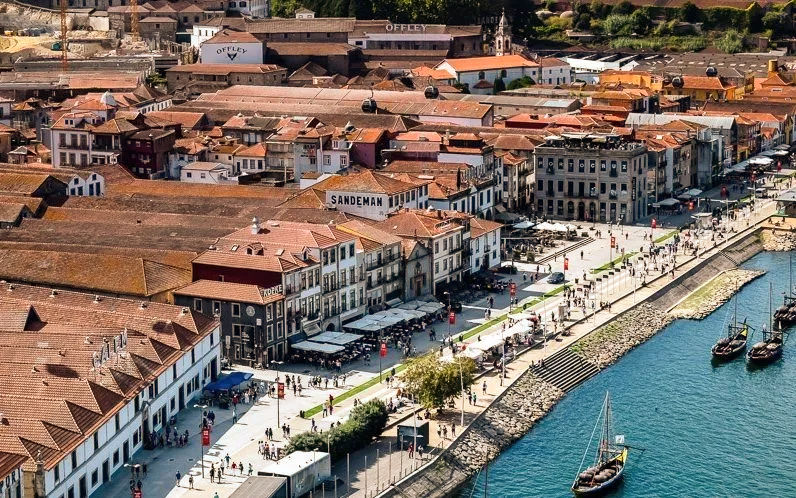
No trip to Porto is complete without crossing the Douro River to Vila Nova de Gaia, where you can visit the famous Port wine cellars. Enjoy a guided tour and tasting session at one of the historic wine lodges and learn about the rich heritage of Port wine production.
Sunset at Passeio das Virtudes – Where Porto Slows Down

If you ask locals where to watch the best sunset in Porto, they’ll smile and say, “Passeio das Virtudes.” Hidden just west of the Clérigos area, this quiet terrace park overlooks the river valley, the gardens below, and the rooftops of Miragaia glowing in the evening light.
As the sun dips low, people gather here with drinks in hand — students, artists, travelers — all sharing the same simple joy of watching the city fade into gold. The air smells faintly of beer and jasmine, music drifts from nearby bars, and for a moment, Porto feels timeless.
It’s not a fancy viewpoint, but it’s one of the most authentic places in Porto — a spot to unwind, chat with locals, and let the day end slowly. Bring a bottle of wine or grab a cold beer from a corner shop, find a bench, and just watch the sky change colors.
Praia da Luz

Praia da Luz is a scenic beach in Porto, located along the Foz do Douro coastline. Known for its rocky shorelines, golden sand, and breathtaking Atlantic views, it’s a peaceful escape from the city center.
The beach is home to the popular Praia da Luz Café, where visitors can enjoy a drink or a meal while admiring the ocean. It’s a great spot for sunsets, leisurely walks, and relaxing by the sea, offering a tranquil atmosphere away from Porto’s bustling streets. 🌊🌅🏖️
Insider Tip from Jonny: For me one my favorites to relax and feel like on vacations.
Conclusion
Porto is a city that perfectly blends old-world charm with modern vibrancy. From its historic landmarks and cultural gems to its stunning views and wine culture, there’s something here for every traveler. Be sure to add these must-see spots to your itinerary for an unforgettable visit to Porto.


Comments